

A Passport to Success
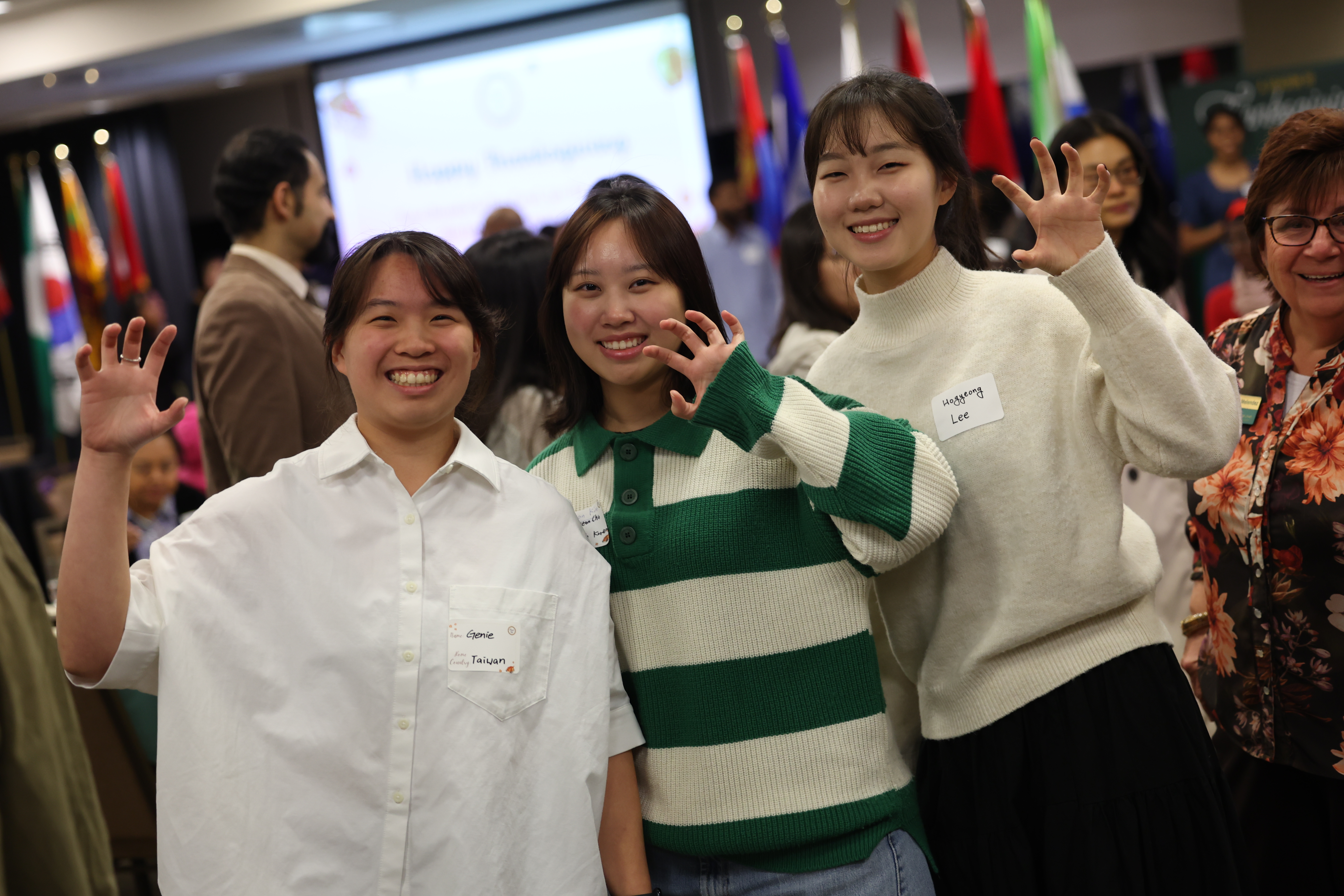
International students at Baylor's International Thanksgiving event.
How Baylor Helps International Students Find Their Academic Footing—and Their Place in the Community
A passport can get a student across a border, but it cannot tell them how to navigate a new classroom, understand an unfamiliar academic system, find the right campus resource or know where to turn when something feels difficult.
For international students, succeeding at an American university can involve challenges that extend well beyond academics. Differences in language, culture, classroom expectations and everyday life can make the transition to a new country and university both exciting and overwhelming. At Baylor University, we believe international students should not have to navigate that transition alone.
The Global Gateway Program began providing International Student Academic Support (ISAS) in Spring 2020 in collaboration with the Center for Global Engagement and Academic Support Programs, creating a dedicated system of support designed to help international undergraduate and graduate students succeed academically and personally. Today, that support takes many forms: individual appointments, academic interventions for students who are struggling, programming designed specifically for new international undergraduates, and resources and training for faculty and staff.
Together, these efforts create more than an academic safety net. They create a place where students can ask questions, find support, and discover that they belong.
A Place to Ask Any Question
The largest portion of ISAS support happens one student at a time. Students may make appointments on their own or be referred by a faculty or staff member. Sometimes they need help understanding an assignment because of language concerns. Sometimes they need help developing better study habits, preparing for an exam, or creating a weekly study plan. And sometimes the question has nothing to do with a class.
A student may need help understanding how to apply for a driver's license, navigating on-campus employment or finding a club or organization where they can connect with other students. That is intentional. ISAS is designed to be a place where international students can bring any question, not simply academic problems.
Appointments may include practical resources, such as guides explaining tutoring options or materials tailored to specific courses. Students can also be connected with other resources across campus, including the Center for Writing Excellence and the Tutoring Center. For students adjusting to a new country, knowing where to go can be just as important as knowing what to do.
One student, Qirui Chen, described the experience this way:
“Using the ISAS office is helpful because I can talk with Professor Debra about my academic problems or successes, and she makes me feel like home when I’m there.”
That last phrase captures something essential about the work. The goal is not simply to provide a service, but to create a relationship.
When Students Need a Little More Support
Sometimes a student needs more than a single appointment. In collaboration with the Office of Student Success and Engagement, international students who are on Academic Notice, have low GPAs or receive faculty progress reports can receive proactive outreach from ISAS.
Students may be encouraged to make an individual appointment or participate in a Strategic Learning course designed to address their specific needs. These courses focus on practical academic skills, including developing effective study habits, planning ahead for major assignments, and building strategies for academic success and resilience. Through individualized weekly meetings, students can monitor their progress, identify challenges, and plan for upcoming coursework. For international students navigating an unfamiliar academic system, this consistent support can provide valuable guidance and help them build confidence and resilience throughout their academic journey.
More than 70% of students who have participated in an ISAS Strategic Learning course have graduated from Baylor or remain current students, reflecting the long-term impact of helping students develop the tools and confidence they need to persist.
Academic support, in other words, is not simply about improving a student's next grade. It is about helping them find a path forward.
Starting Strong
Sometimes the best way to prevent a problem is to help students understand the system before they encounter it.
Since Fall 2024, all incoming international freshmen have participated in the New Student Experience course, First-Year International (FYI): Transition to the U.S. University. More than 260 students have taken the course since the Fall 2024 requirement was introduced. The course introduces students to important campus resources, successful study strategies, and the expectations and norms of the U.S. university classroom.
For students coming from different educational systems, those expectations can be unfamiliar. How should a student interact with a professor? What does office hours actually mean? When should you ask for help? How does classroom participation work? What resources are available when a class becomes difficult? Transitions gives students the opportunity to answer these questions before they become barriers, while also helping them build confidence as they navigate a new academic environment.
The course creates something just as important: community. Students begin their Baylor journey alongside other international students who are navigating many of the same transitions, experiences, and questions, helping them build connections and a sense of belonging from the start.
And the results are encouraging. Less than 2% of students enrolled in the FYI: Transition to the U.S. University course received Academic Notice the following term.
But perhaps the students themselves describe the impact best.
One student from South Korea shared:
“This class taught me that the Tutoring Center, the Success Center, Academic Advising, and office hours exist to support me. I’ve already used office hours for chemistry class a lot and it helped me understand the materials much better.”
Another student reflected:
“I feel truly blessed to be able to study at Baylor where the community supports both my academic and spiritual development.”
For another student from Pakistan, the experience became something much larger than an academic transition:
“To sum it up, this semester wasn't just an academic chapter. It was a transformation. The lesson I learned, the community I found, and the vision I built for my life all rooted themselves here at Baylor.”
That is the kind of transition the program hopes to create—not simply helping students adjust to Baylor, but helping them begin to thrive here.
Supporting the People Who Support Students
International student success is not the responsibility of one office. Faculty and staff across Baylor interact with international students every day, and they sometimes need additional tools and strategies to understand cultural and academic differences that may affect a student's experience.
ISAS provides trainings and workshops for departments and works collaboratively with faculty and staff to help students navigate challenges and connect with the right resources. Those partnerships matter.
Dr. Bob Shipp, Senior Director for Undergraduate Success, describes the value of having specialized support available:
“Because of the expertise in working with international students, our ISAS is able to approach student success with tools to help our students who may have situations that go beyond those faced by our American students.”
He also noted that ISAS gives students access to someone who understands both the cultural and academic differences they may be navigating.
That perspective is echoed by Sam Binkley, Associate Director for Curriculum Management in Baylor's Hankamer School of Business:
“The ISAS office is instrumental to the success of our international student population at Baylor.”
Binkley has seen students benefit from support with English proficiency, cultural differences and academic expectations that may differ from those in their home countries.
“I’m grateful for the work the ISAS does so that our international students can succeed at Baylor,” he said.
Faculty don't have to navigate these challenges alone, either. By working together, faculty, staff and ISAS can create a more coordinated network of support around students.
More Than Academic Support
International students come to Baylor with different backgrounds, different goals and different stories. Some arrive already familiar with the U.S. education system, while others are encountering it for the first time. Some need help with a challenging course. Others simply need someone to explain how something works.
The role of ISAS is to meet students wherever they are. It provides a safe place to ask questions without embarrassment, seek help before a problem becomes a crisis and build the confidence to navigate unfamiliar situations.
And sometimes, the impact of that support becomes clearest only years later.
As one student's parents reflected at their child's graduation:
“Your guidance in studies, thoughtful support through challenges, and kindness that nurtured both confidence and character have made a profound impact. You didn’t just teach – you inspired.”
That is ultimately what academic support for international students is about.
Not simply helping students pass a class. Not simply helping them understand an assignment. Not simply helping them adjust to an unfamiliar university.
It is about helping them develop the confidence, skills and sense of belonging to thrive in a new environment—and become contributing members of the Baylor community.
A passport may be what brings a student to Baylor. But relationships, support and a welcoming community can help make Baylor feel like home.