

Building Connections, Expanding Opportunity
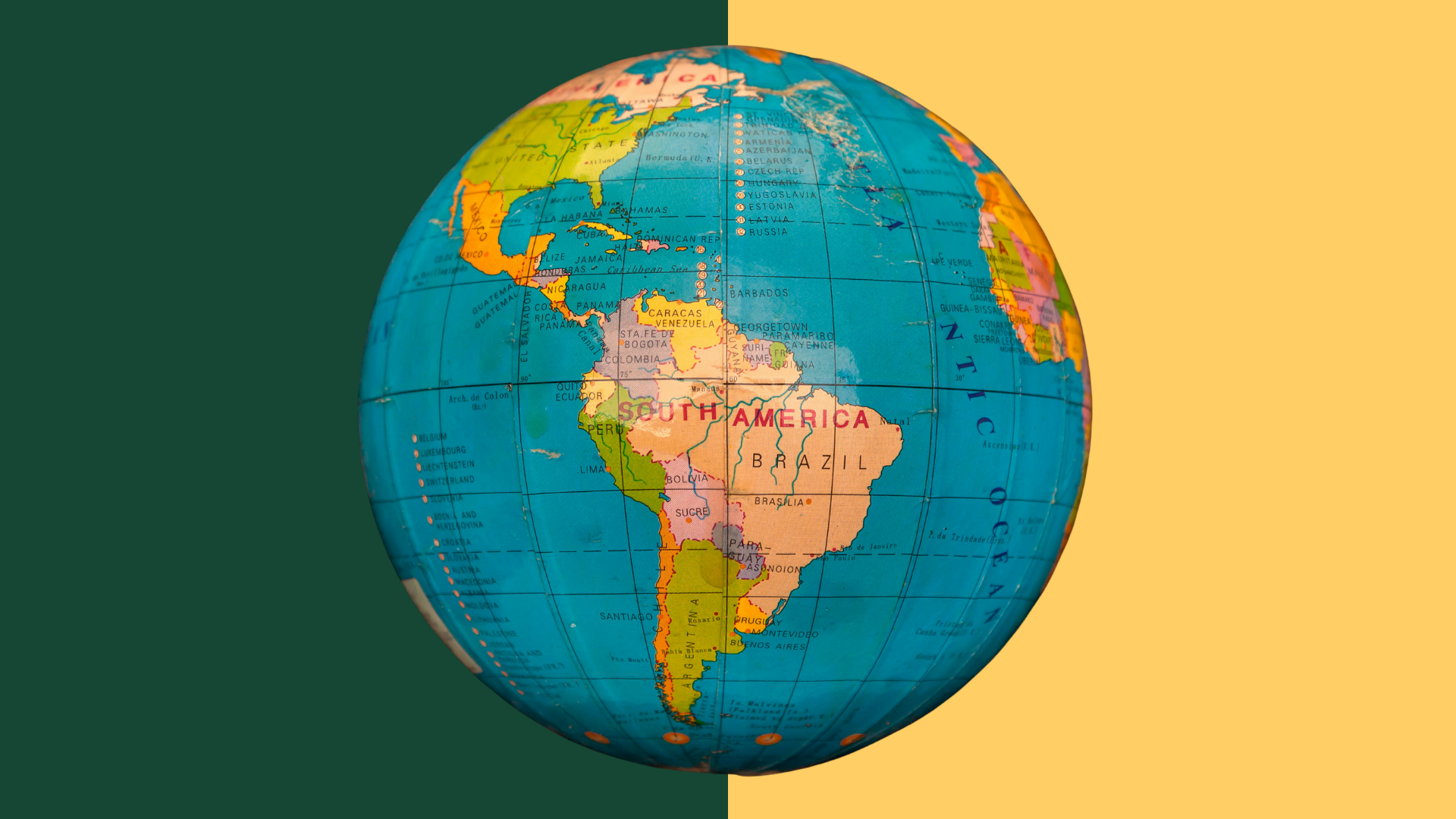
Baylor’s Latin America and Latinx Student Support Initiative is strengthening relationships across campus and around the world.
For Baylor University, global engagement begins with relationships—relationships among students, faculty and staff, partner institutions, and communities around the world. During the 2025–2026 academic year, the Latin America and Latinx Student Support Initiative (LALSSI) brought that idea into sharper focus, examining how Baylor can deepen its connections to Latin America while creating stronger pathways for Latino students to thrive at home and abroad.
The initiative’s work spanned three areas: strengthening Baylor’s partnerships throughout Latin America, creating clearer pathways for faculty research and international mobility, and identifying ways to better support Latino students throughout their Baylor experience.
Investing in Stronger Partnerships
Baylor already has a substantial network of connections throughout Latin America, including approximately 14 institutional agreements, 16 missions and 52 research collaborations. To identify opportunities for deeper, more strategic engagement, the LALSSI Partnerships Subcommittee surveyed faculty and evaluated existing relationships according to research potential, student learning, financial sustainability, strategic alignment, institutional reciprocity, community engagement, institutional capacity, and operational feasibility.
The result was a recommendation to develop a strategic network centered on three established Baylor partners in Costa Rica, Argentina, and Ecuador. Each geographic region offers opportunities for student and faculty exchange, research, teaching, service, and community engagement. For example, at the Universidad de Costa Rica, Baylor’s established graduate study abroad program in education connects students with research, service learning, and community engagement, including opportunities to work with rural field research stations and local schools. At Universidad Nacional de Cuyo, a relationship dating to 1996 has grown to encompass study abroad, research, medical shadowing, English-language teaching and reciprocal student exchange. And at Universidad San Francisco de Quito, Baylor students and faculty have access to extensive research and exchange opportunities, including the Galápagos Islands and the Tiputini Biodiversity Station in the Amazon. The goal is not simply to add more partnerships, but to invest strategically in relationships that are already reciprocal, sustainable, and meaningful for Baylor students and faculty.
Subcommittee members included Lauren Barron, Melisa Dracos, Steven Fernandez, Felipe Hinojosa, Andrew (Andy) Hogue, Cornell Menking, Michael Muehlenbein, Terrill Saxon, and Gretchen Stokes.
Creating Pathways for Faculty Global Engagement
The Research and Faculty Mobility Subcommittee developed a guiding document to help Baylor faculty navigate the process of preparing for international research and teaching—from developing relationships with host institutions to securing funding, addressing travel and visa requirements, coordinating responsibilities at Baylor, and completing necessary compliance and registration requirements.
The recommendations emphasize that successful international research often begins years before a visit takes place. Faculty are encouraged to establish relationships with international colleagues well in advance, communicate with potential host institutions during the grant-writing process, and work closely with their departments, deans, the Office of the Vice Provost for Research, and the Center for Global Engagement.
The committee also highlighted opportunities for faculty to build upon Baylor’s existing international relationships and pursue external funding, including Fulbright programs. Baylor faculty have recently participated in Fulbright opportunities in countries that include Brazil, Slovakia, Hungary, Kenya, South Korea, Ireland, India, and Germany.
By creating clearer guidance and stronger connections between faculty and university resources, the initiative seeks to make international research and teaching more accessible and sustainable.
Subcommittee members included Ricardo Alvarez Pimentel, Bryan Brooks, Carlos Cardoza-Orlandi, Guilherme Feitosa de Almeida, Meredith Moore, Marcelo Somos, and Charles (Chuck) Weaver.
Supporting Students at Home—and Around the World
LALSSI’s work also examined the experiences of Latino students at Baylor, recognizing that meaningful global engagement must be paired with meaningful support on campus.
The Latinx Student Support Subcommittee found that for the Fall 2024 cohort, first-year retention among Latino students reached 89%, equal to that of their non-Latino peers. At the same time, a persistent graduation gap remains, with Latino students graduating at lower rates than their peers over the past several years.
The data also revealed both connection and opportunity. More than 70% of Latino first-year students reported a positive sense of belonging early in their Baylor experience, while 71% of surveyed students said that at least one faculty or staff member had taken a personal interest in their success. Yet 42.9% reported having felt out of place often or very often during the academic year, demonstrating the continued importance of personal relationships, representation and culturally responsive support.
One of the clearest successes identified by the committee is Adelante and Adelante Beyond Success Programs, Baylor’s cohort-based student success program. Recent Adelante cohorts achieved 100% first-year retention, while the program’s six-year graduation rate reached 86%, compared with 74% among Latino students overall. The committee recommended institutionalizing the program so that its benefits can reach more students and continue beyond the availability of external grant funding.
The committee also identified an important connection between student success and global learning. Latino students reported relatively low participation in study abroad and international mission experiences, prompting recommendations for more intentional outreach, bilingual resources, and family-centered communication about global opportunities.
Among the recommendations is having more bilingual staff services Expand Spanish‑language resources at the Paul L. Foster Success Center, including subject‑specific tutoring in Spanish, particularly to support international students.
This large and active subcommittee in 2025-2026 included Maggie Bryant, Patricia Escamilla, Steven Fernandez, Teresa Fernandez-Luna, Michelle Gonzalez, Tranquility Gordon, Geoffrey Griggs, Tracey Jones, Karenna Malavanti, Mona Menking, Gabrielle (Gaby) Miller, Austin Morell, Elizabeth (Liz) Palacios, Coretta Pittman, Luci Ramos Hope, and Priscilla Serrato.
A More Connected Vision of Global Engagement
Taken together, the work of LALSSI reflects a broader understanding of what it means to be a globally engaged university. It means building partnerships that endure. It means equipping faculty to collaborate, teach and conduct research across borders. It means ensuring students have the support and resources they need to participate fully in the life of the university today, and prepare for flourishing lives in the years to come.
The initiative’s work ultimately points toward a model in which global engagement is not a separate experience, but a thread woven throughout the Baylor experience: connecting students to communities, faculty to colleagues, research to real-world settings, and Baylor to partners across Latin America and beyond.
In that sense, this work is about more than identifying opportunities. It is about building the relationships and structures that allow those opportunities to become lasting parts of Baylor’s mission of preparing students for worldwide leadership and service.